Research Areas
Computational Biology and Health
Computational Biology and Health uses mathematical, statistical, and machine learning techniques to solve problems arising in biological and biomedical research. Some of the focus areas include medical imaging, electronic health records, structural biology, and molecular biology. Our research groups collaborate with a number of other departments and schools inside NYU, including Biology, Chemistry, Neuroscience, and the School of Medicine.
Faculty












Crypto
Faculty








Research groups
Seminars
Data Management and Mining
Faculty


Formal Methods, Verification, and Programming Languages
The long-term goal of the formal methods group is to increase the reliability of hardware and software systems by providing tools and techniques for the analysis of these systems. In formal analysis, a mathematical model of a system is developed, which can then be used to prove properties of the system or to discover bugs in the system when the proof fails. The activities and interests of the formal methods group cover a broad spectrum, from the study of mathematical foundations in programming languages and logic, to the implementation of verification tools and the application of these tools for proving the correctness of computer systems.
Faculty





Research groups
Courses and Seminars
- Formal Methods Seminar
- CSCI-GA.3110 Honors Programming Languages
Graphics, Vision, User Interfaces, and Games
Researchers in Computer Graphics work on computational and mathematical techniques for creating and manipulating computer representations of real and virtual objects and making images of such objects. The main directions of computer graphics research at NYU include animation, geometric modeling, physically-based simulation and computational photography.
The area of Computer Vision is concerned with algorithms and theory necessary to extract information from visual data (images, video, range scans, stereo images, 3D MRI and CAT scan data etc). There is a growing overlap between computer vision and graphics research, as the data acquired from images and video is increasingly used in computer graphics applications.
Within games research, topics include AI for game-playing, adaptive non-player characters, player modeling, and procedural generation of game content.
Faculty













Research groups
- Future Reality Lab
- Geometric Computing Lab
- CILVR Lab (Computational Intelligence, Learning, Vision, and Robotics)
- Game Innovation Lab
Courses and Seminars
Machine Learning
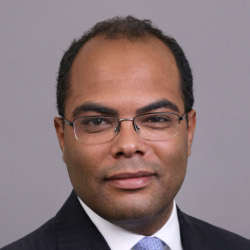
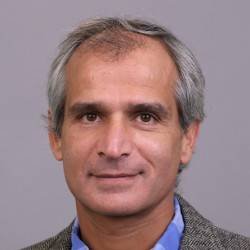
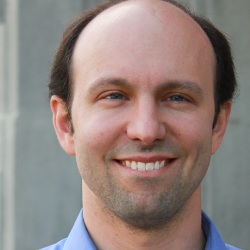
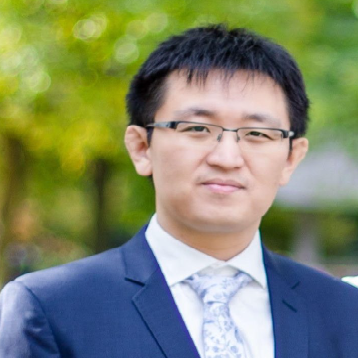
Machine learning is concerned with developing of mathematical foundations and algorithm design needed for computers to learn, that is, to adapt their responses based on information extracted from data. For example, learning algorithms may allow a robot to navigate an unknown environment, improving its performance as it acquires more and more data, or a voice-controlled system to improve its recognition of a person's speech after analysis of a sufficient number of samples. Machine learning techniques draw on many fundamental areas from statistics to theoretical computer science, and are used in a broad variety applications: robotics, speech analysis, health care, finance, computer games, handwriting recognition to name just a few.
Faculty



















Research groups
Courses and Seminars
- CSCI-UA.0473 Introduction to Machine Learning
- CSCI-GA.2569 Inference and Representation
- CSCI-GA.2565 Machine Learning
- CSCI-GA.2572 Deep Learning
Natural Language, Speech Processing, and Knowledge Representation
The amount of text which is available in electronic form is growing at an explosive rate. In addition to the web, large quantities of text are being collected for medical, legal, commercial, and scientific applications. But the tools for getting the information we need out of this text are still quite primitive. Our research groups in natural language processing are building systems to extract specific information from large text collections, and to present it in the user's preferred language. A closely related area, speech processing, deals with coding, synthesis and extraction of information from speech signals.
Natural language processing has a long history at NYU. The Linguistic String Project was one of the pioneers in natural language processing research in the United States. The Proteus Project focuses on automatically learning the linguistic knowledge needed for information extraction and machine translation. It has developed extraction systems in English and Japanese, and a series of language-independent translation models. It also conducts a wide range of basic research, and develops large-scale dictionaries and other resources for natural language processing.
Faculty





Research groups
Courses and Seminars
Networks, Operating and Distributed Systems
Systems and networking research explores how to structure the basic software running on individual computers and how to coordinate between different computers. Significant challenges include how to support increasing numbers of processors in modern computer systems, leverage the many embedded and mobile computing devices, creating lightweight virtualization technologies, and build services that scale to a global audience.
Faculty





Research groups
Courses and Seminars
Scientific Computing and Scientific Machine Learning
Computational models and numerical simulations of complex physical systems are fundamental for advancing science and engineering. Key challenges from a computational and mathematical perspective are making reliable predictions about physical phenomena and engineering processes at scale and solving tasks such as parameter estimation, controlling systems, and quantifying uncertainties for, ultimately, guiding decision-making. New data-centric challenges of simulating ever larger realistic physical systems are arising such as learning models of physical systems from data and predicting system behavior far out in the tails of data distributions where typically the scientifically most interesting events happen. These are increasingly addressed with scientific machine learning, a new discipline at the intersection of traditional scientific computing techniques and machine learning. Many faculty at Courant, both in the Computer Science and Mathematics Departments, have strong interests in scientific computing and scientific machine learning, in general methods and analysis, in specific application areas, and in high-performance computing and open-source software.
Faculty






Research groups
Courses and Seminars
- Computational Mathematics and Scientific Computing Seminar
- Applied Math / Applied Math Lab Seminar
- Math and Data (MAD) Seminar
Security and Privacy
How can we design a protocol or system to be secure and private? How can we do that when the adversaries are not only ruthless about deploying any attack that works but also continually "improving"? How can we make sure that the mathematical notions of security and privacy, as well as the practical properties of systems, meet the needs of many stakeholders, including usability and efficiency concerns, economic incentives, and legal or regulatory requirements? The security research group at Courant develops rigorous solutions to these problems, studying attacks, and building systems with provable security models and assumptions. The systems we build are often widely deployed in practice. Particular areas of interest include applied cryptography, probabilistic and zero-knowledge proofs, cryptocurrencies and decentralized systems, software supply chain security, virtualization, and law and policy.
Faculty


Evan Johnson


Theory and Algorithms
Three key issues for an algorithm are: Is it correct? How efficient is it? Can one do better? Our strong and diverse group seeks provable answers to these questions. It focuses on problems and questions in the following areas: complexity theory, cryptography, computational geometry, computational algebra, randomness (in algorithm design and average case analysis) and algorithmic game theory.