Asymptopia
Asymtpopia has been published by the American Math Society.Click here for a poster (Design: Danielle Spencer)
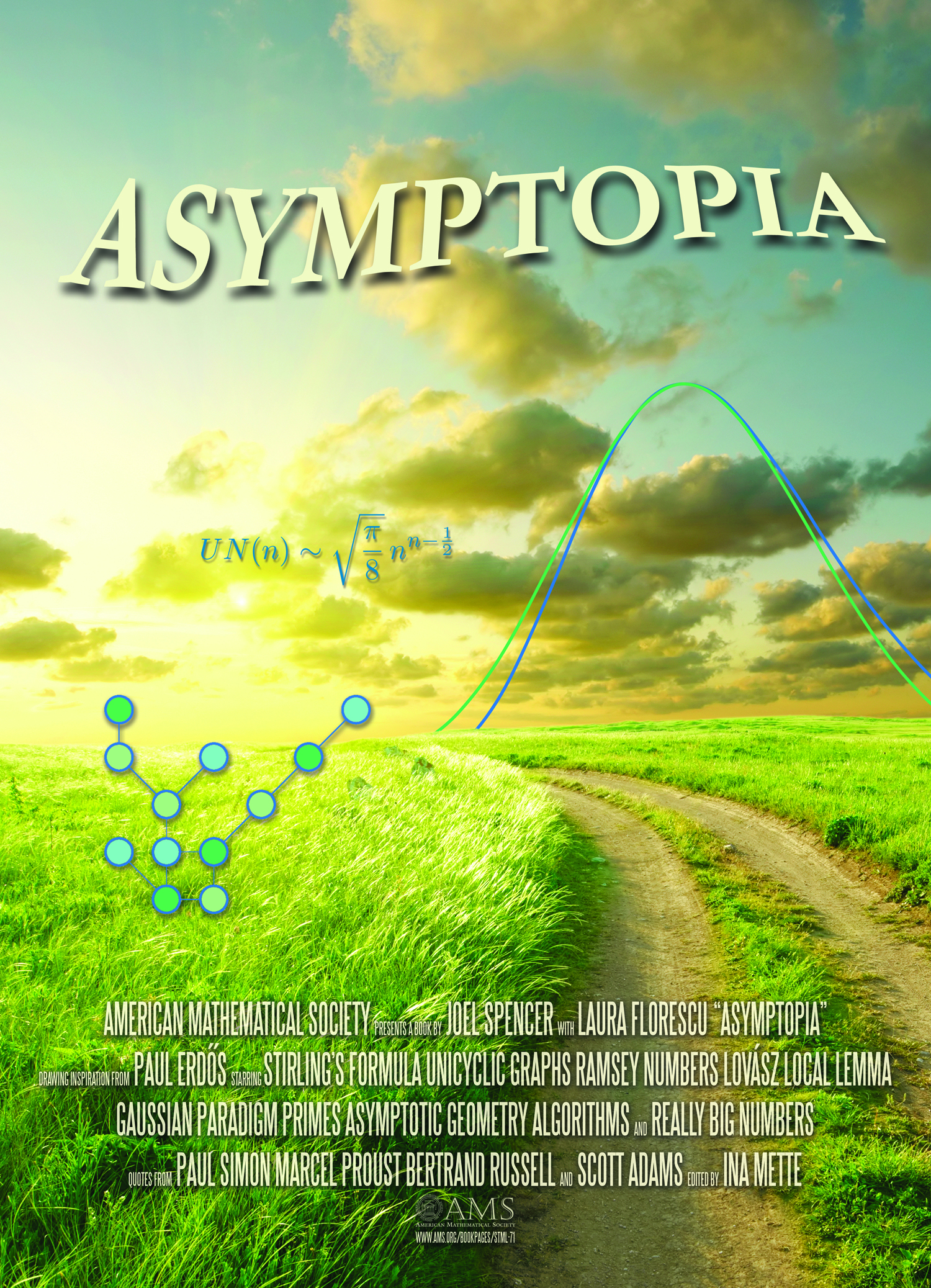
This book is aimed at strong undergraduates, though it is also suitable for particularly good high school students or for graduates (or senior faculty!) wanting to learn some basic techniques. From the back cover: Asymptotics in one form or another are part of the landscape for every mathematician. The objective of this book is to present the ideas of how to approach asymptotic problems that arise in discrete mathematics, analysis of algorithms, and number theory. A broad range of topics is covered, including distribution of prime integers, Erdos Magic, random graphs, Ramsey numbers, and asymptotic geometry. The author is a disciple of Paul Erdos, who taught him about Asymptopia. Primes less than n, graphs with v vertices, random walks of t steps--Erdos was fascinated by the limiting behavior as the variables approached, but never reached, infinity. Asymptotics is very much an art. The various functions nlnn, n^2, (ln n)/n, \sqrt{\ln n}, ln(ln n) all have distinct personalities. Erdos knew these functions as personal friends. It is the author's hope that these insights may be passed on, that the reader may similarly feel which function has the right temperament for a given task.
Asymptopia is a beautiful world. Enjoy!
For ordering information from AMS (also available on Amazon) click here
Click (Material will be slightly different from the text here and below) for preface
Click here for Chapter 0 on primes
Click here for Chapter 1 on Stirling's Formula
Chapters: An Infinity of Primes; Stirling's Formula; Big Oh, Little Oh and All That; Integration in Asymptopia; From Integrals to Sums; Asymptotics of Binomial Coefficients; Unicyclic Graphs; Ramsey Numbers; Large Deviations; Primes; Asymptotic Geometry; Algorithms; Potpourri; Really Big Numbers!
The Probabilistic Method -- Fourth Edition
Winner of the 2021 Steele Prize of the American Math Society. Click here for the citationClick here for the Wiley website.
Click here for Table of Contents toc
Click here for the Szemeredi Regularity Lemma szem
Click here for an all new section on Graphons graphans
Click here for an algorithmic approach to discrepency sixsigma
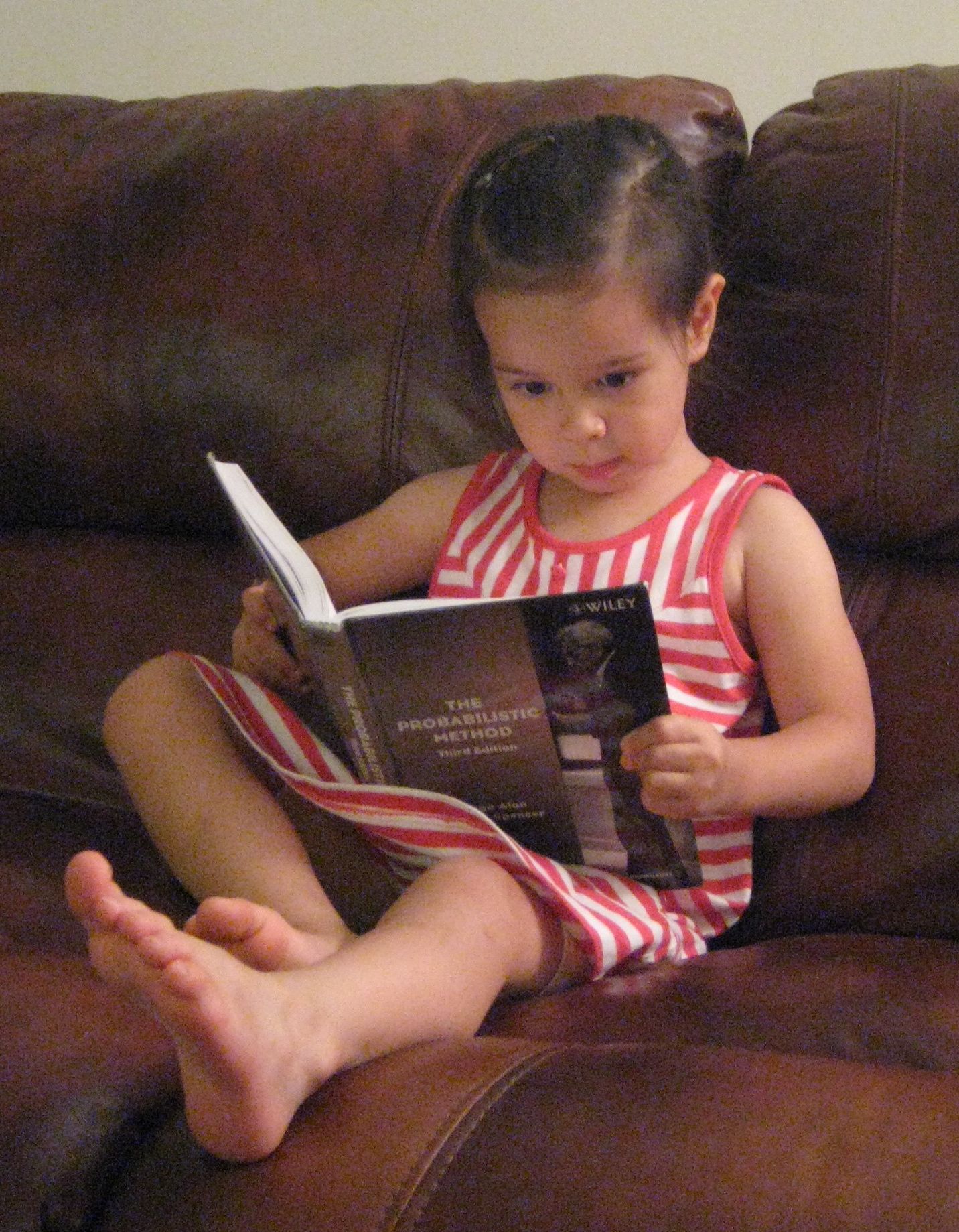
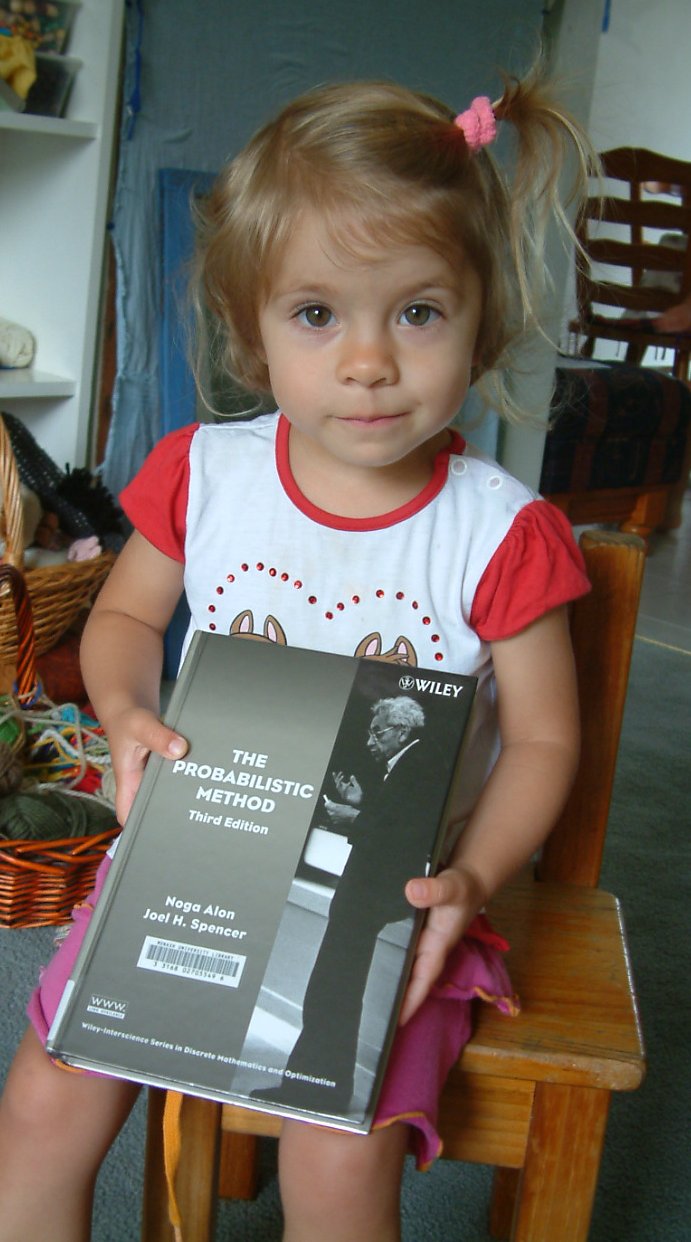
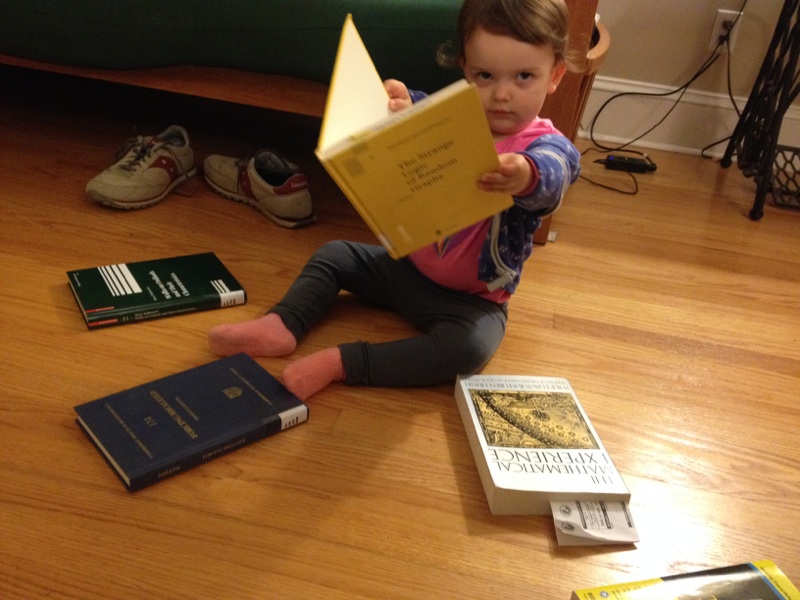
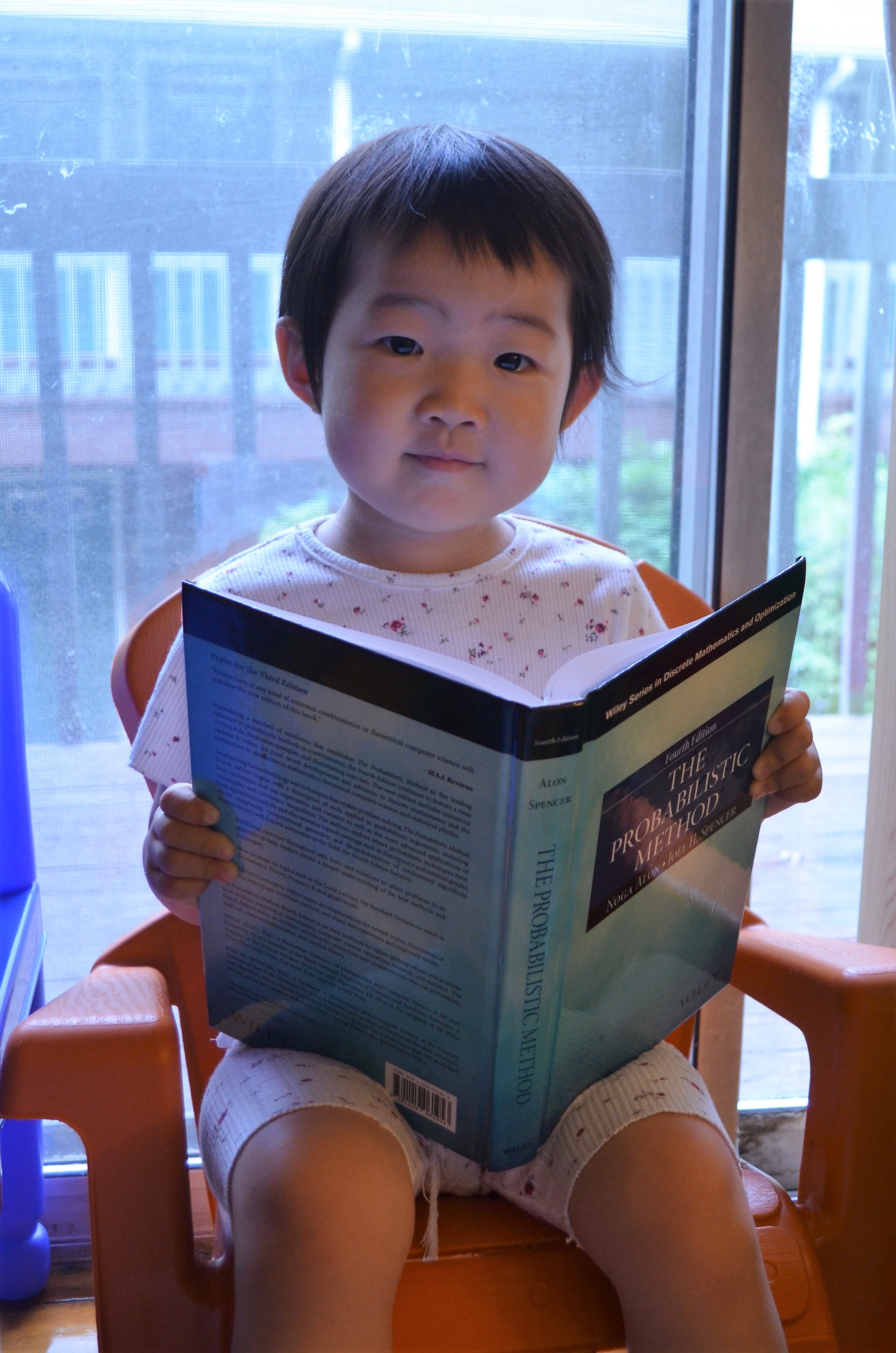
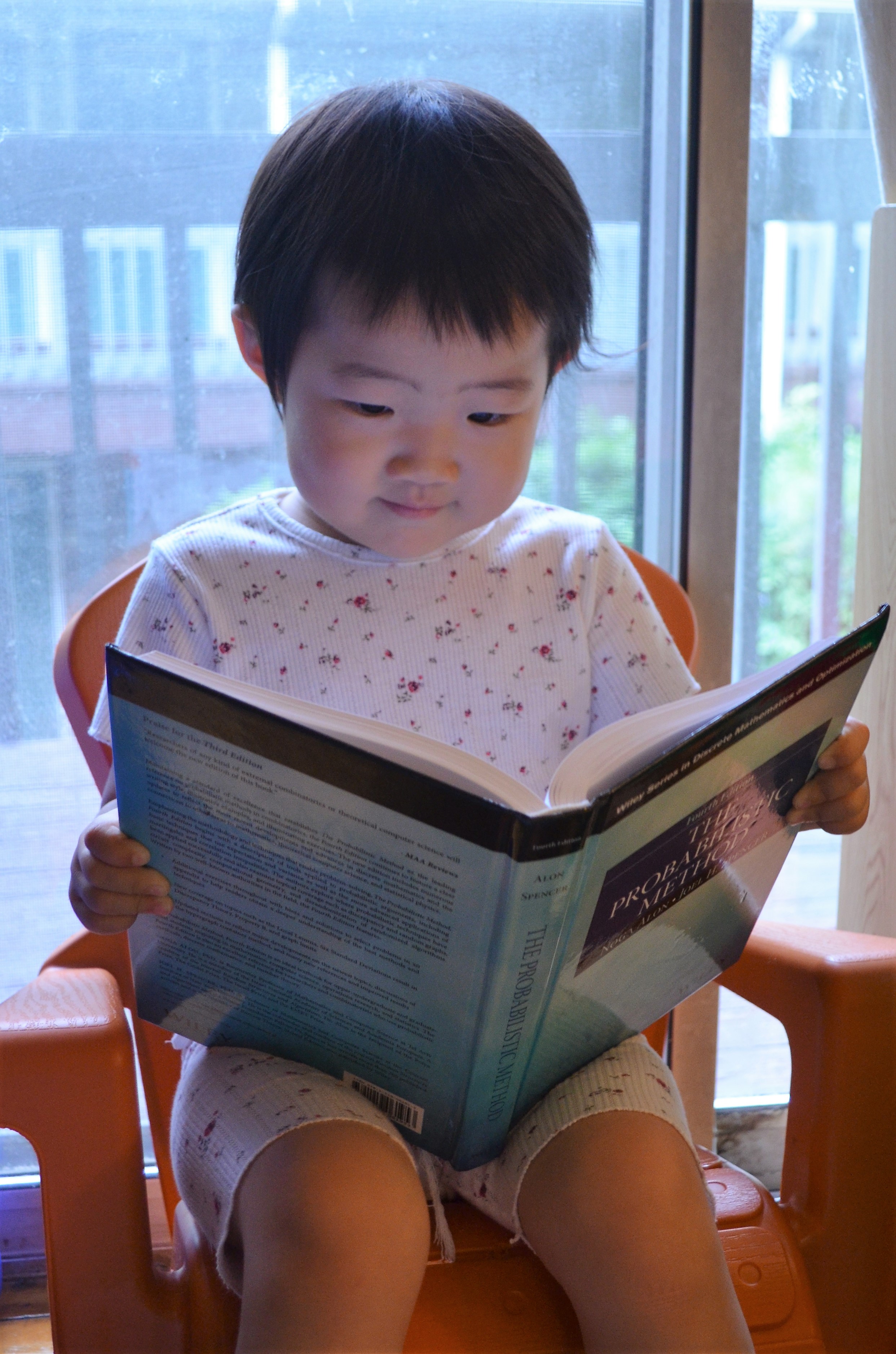
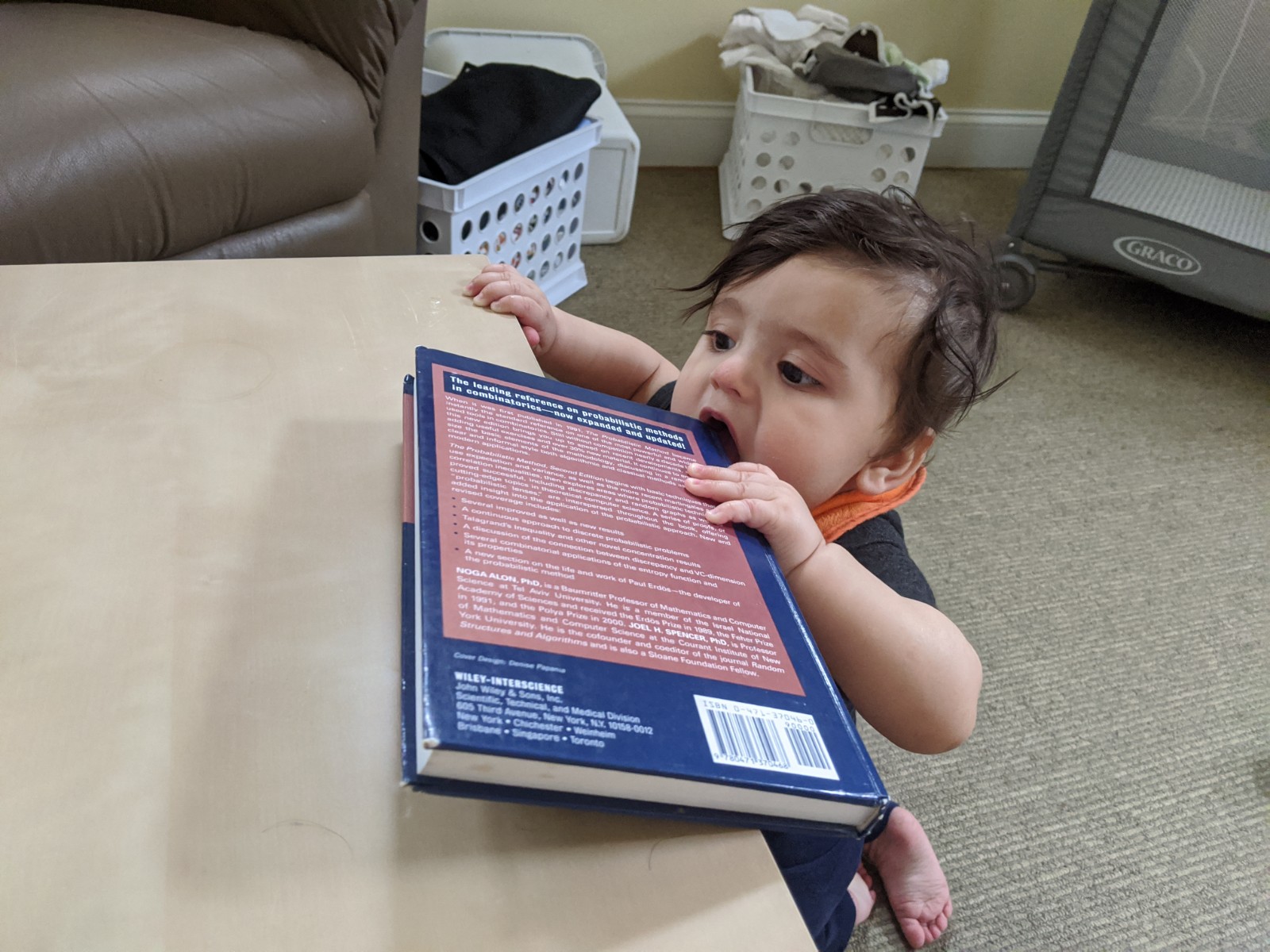
Click here Hannah1 Hannah2 for our most beautiful and most attentive reader. She's a fox! And, in strong competition: johanna and jazmin and emily alsoemily1 alsoemily2 joe tomo fiona alice-bryan advait willow maxwell
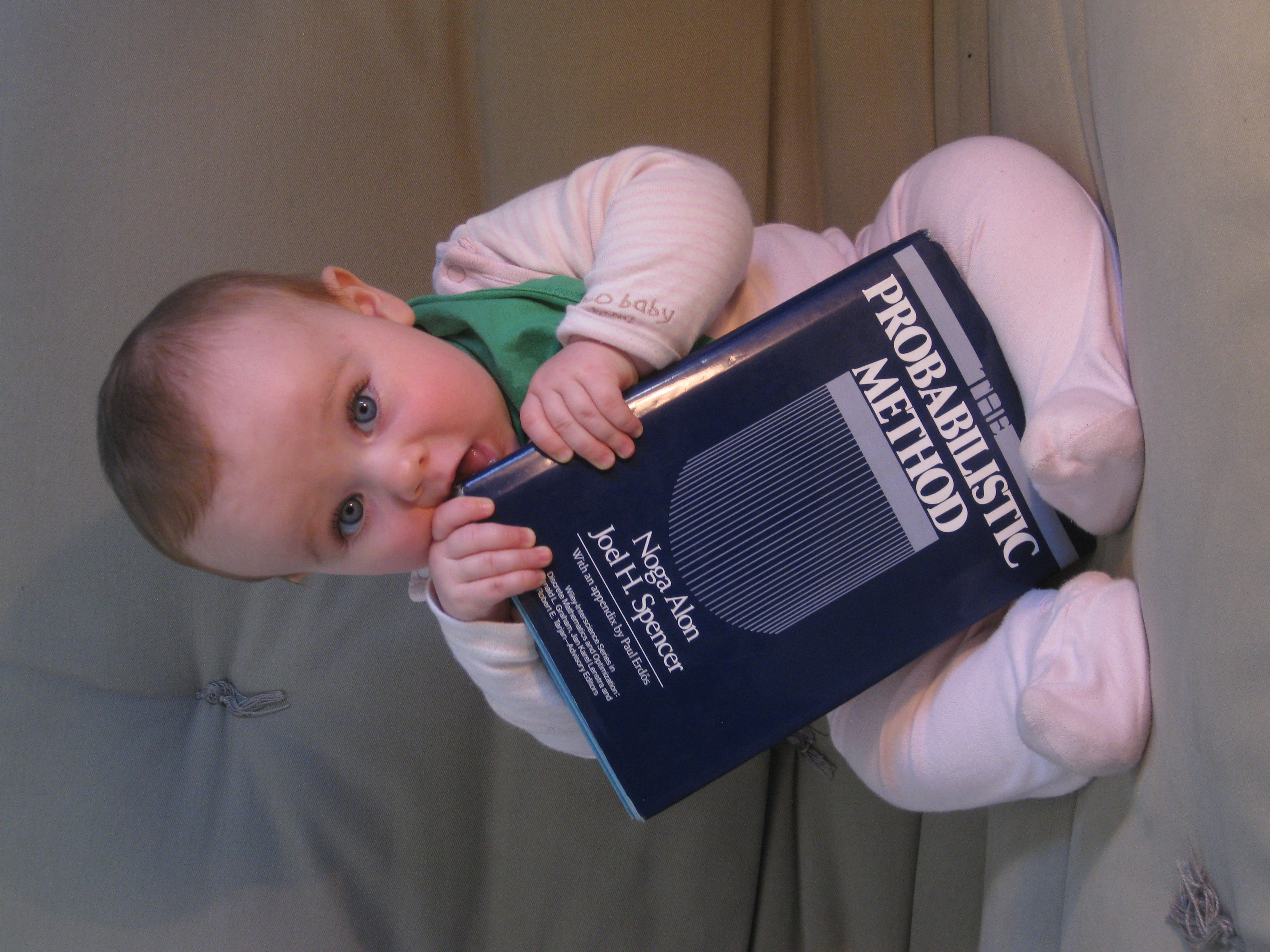
SPECIAL OFFER: Yes, your child (grandchild, niece, nephew, sibling) can have an Erdos Number of 1+\sqrt{-1}! Just send a photo of him/her absorbed in reading/playing/teething our book and I'll post it!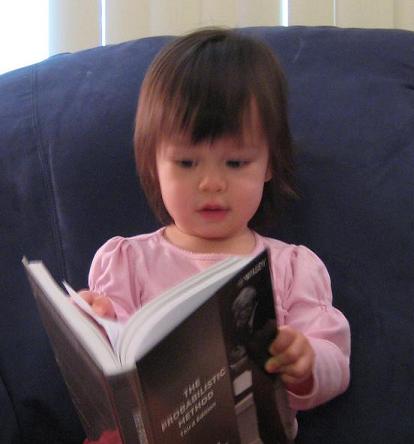
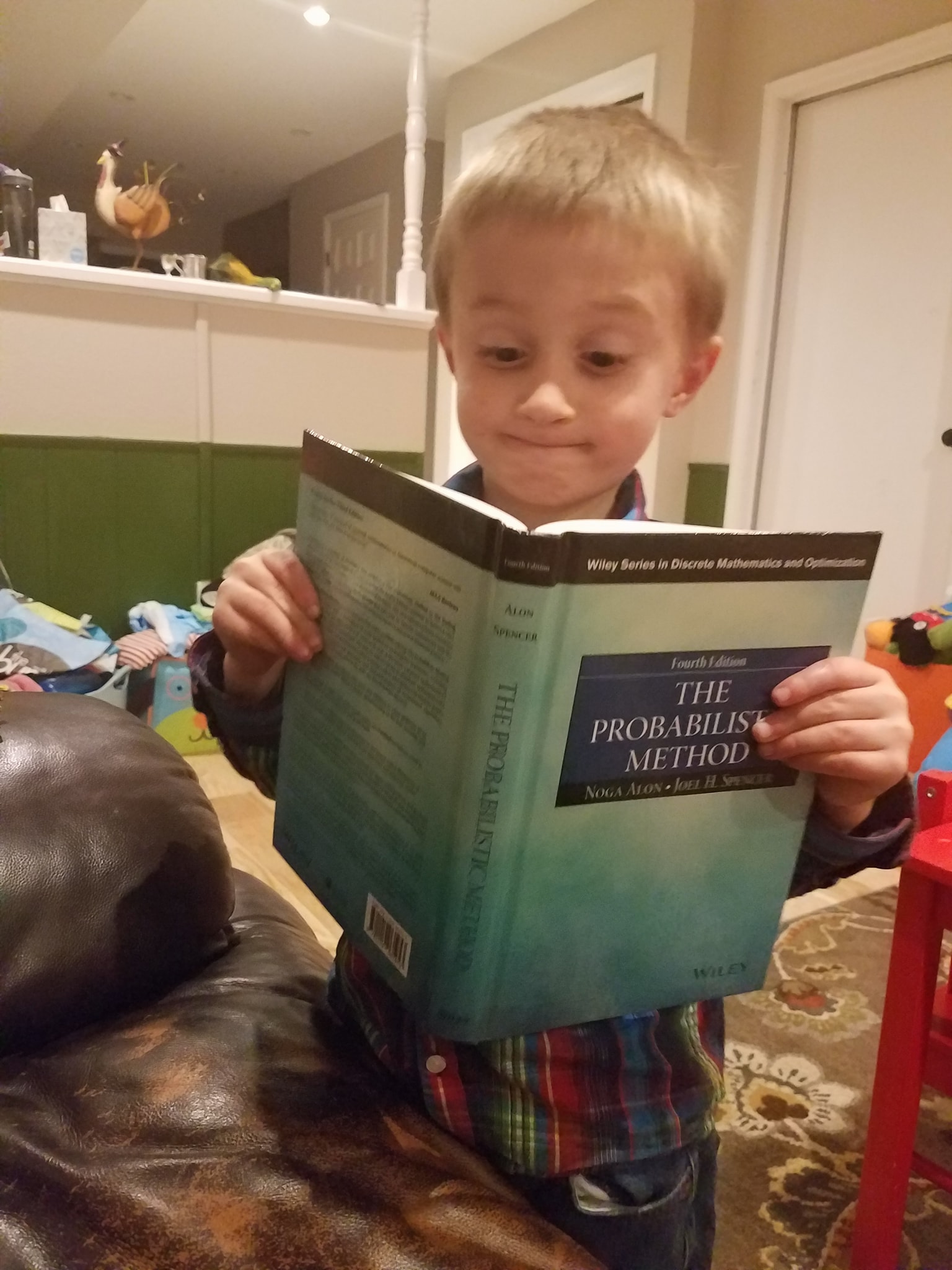
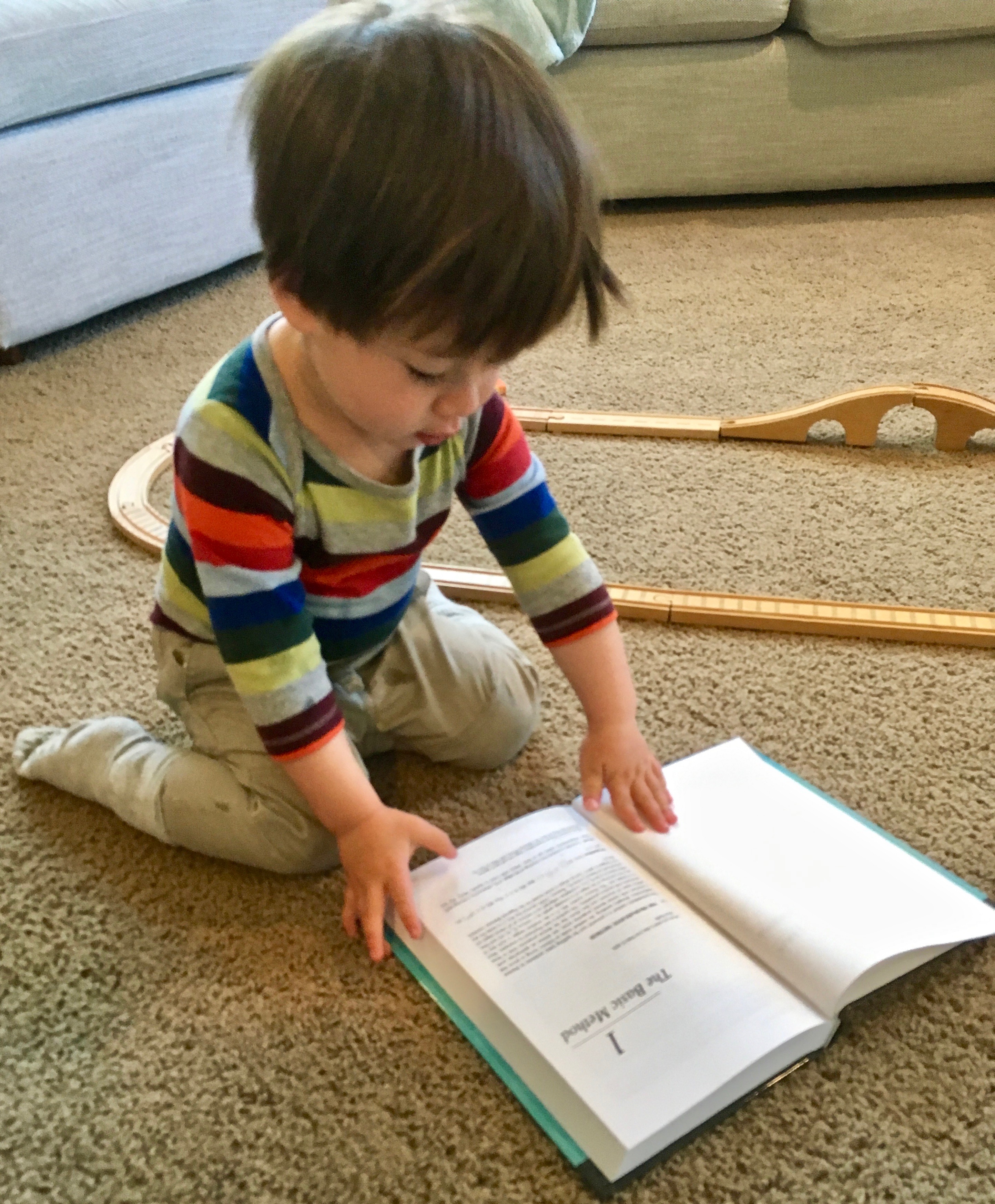
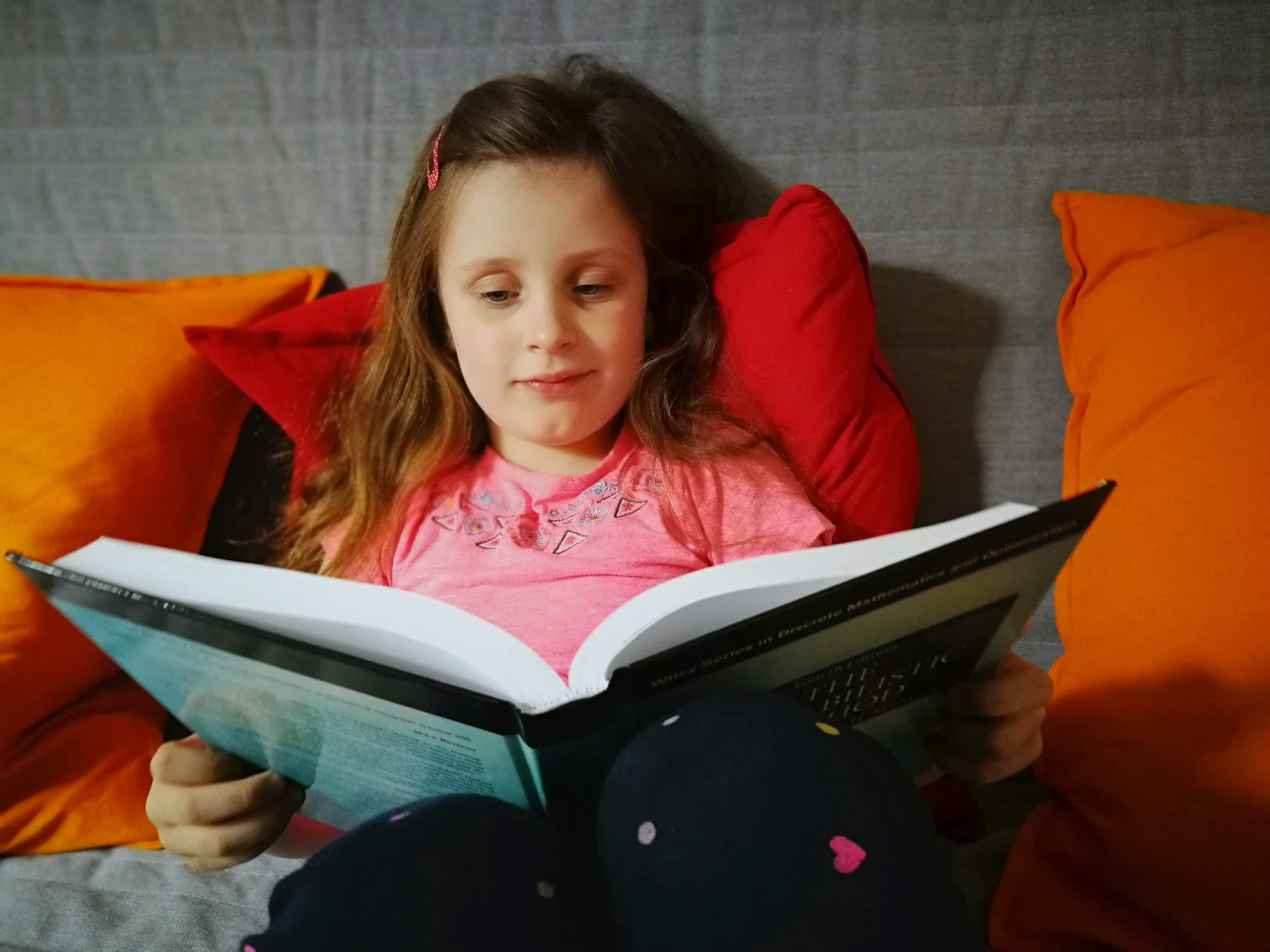
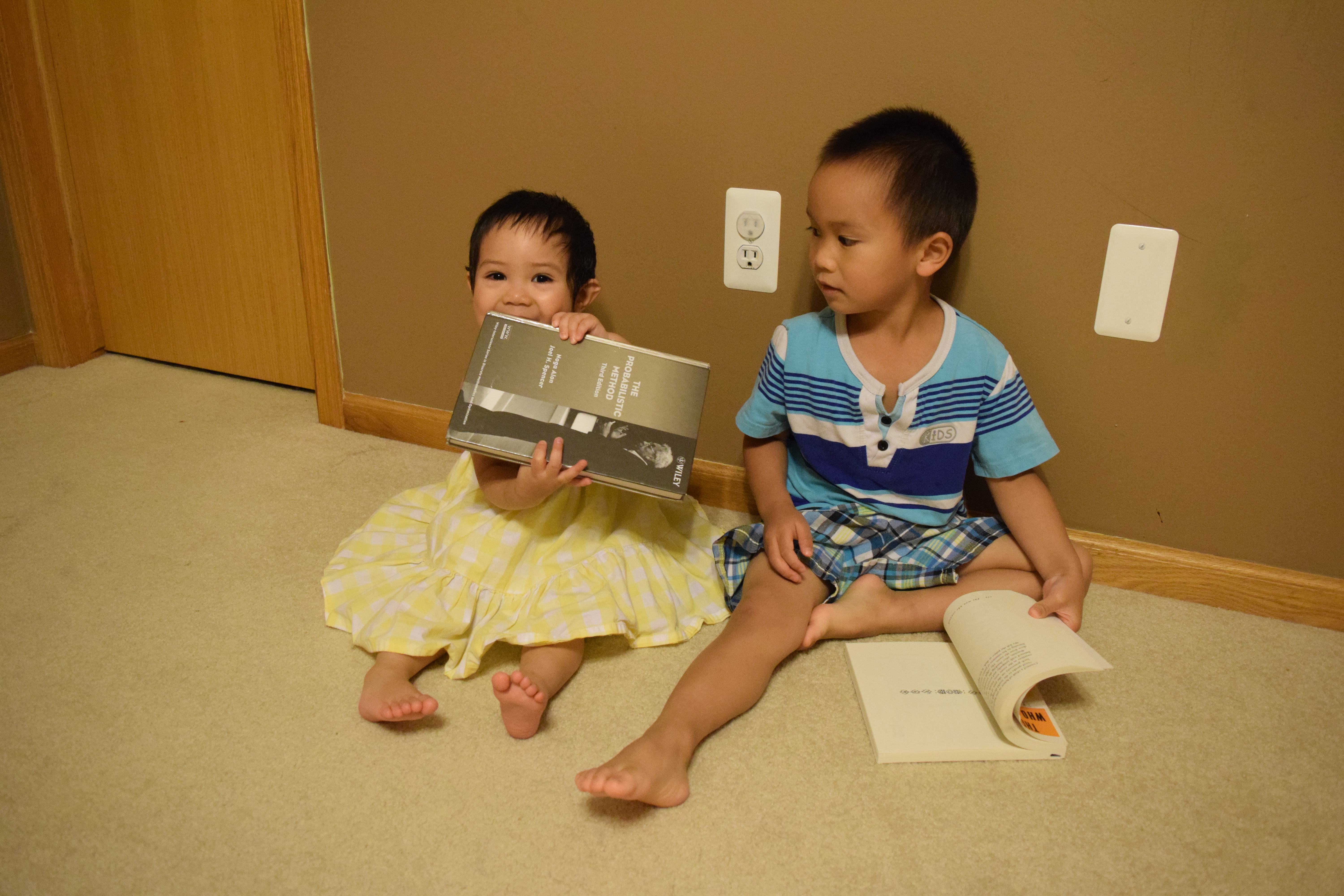


Photos

Photo by MA
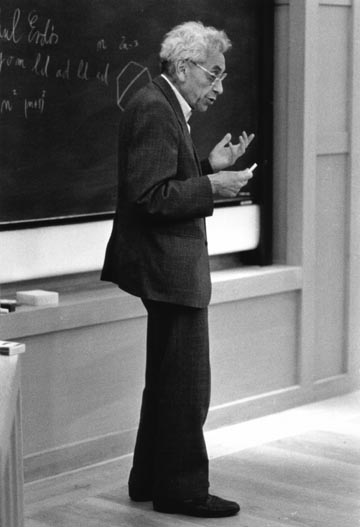
Click for family photos, or a photo of Paul Erdos.
High School MathCamps
This is a topic dear to my heart. I am former chair of an AMS committee that gives grants to High School Math Camps. Click for for information about donations to a worthy cause!Some Links
My Wikipedia pageErdos Wikipedia page
Danielle (daughter's) website
David (son's) website
Erdos Number Project
Budapest Semesters in Mathematics
Combinatorialist
Quotes on Combinatorics
[TOP]