|
NYC Computer Vision Day 2026
NYC Computer Vision Day is an invite-only event that aims to be an informal day where the computer vision community from NYC and surroundings can share ideas and meet. A primary focus is visibility for graduate students and early career researchers.
Date: Monday, April 27
Time: 10AM - 6:15PM (breakfast available at 9:30AM)
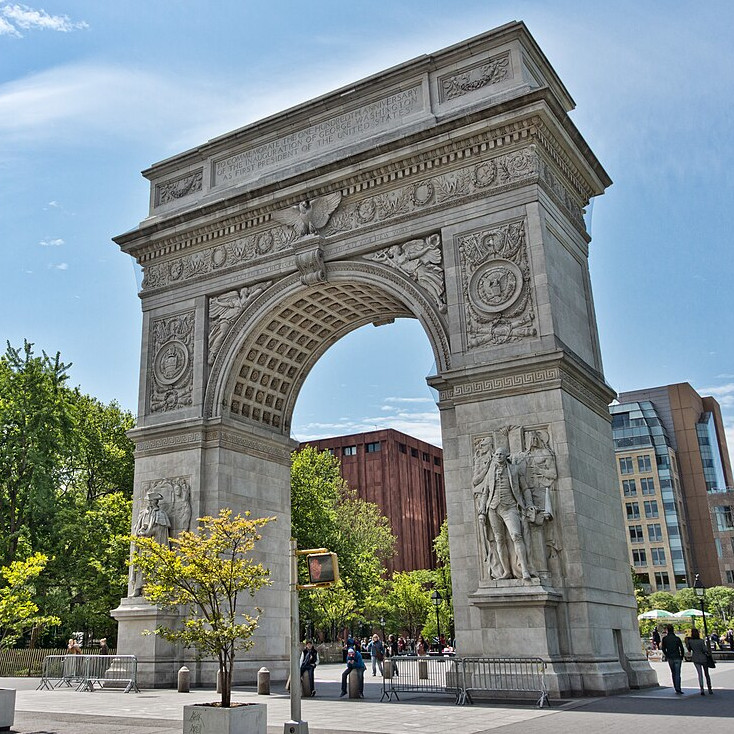
Location: NYU Kimmel Center
(Map)
Organizer: David Fouhey
Attendance Information: There is a strict guest list. If you are not a confirmed guest, you will not be admitted to the event. There are no exceptions.
|
|
☕ Casual Conversations and Coffee (Rosenthal Pavilion, 10th floor):
9:30AM — 10:00AM
Doors will open at 9:30AM to give time to get settled in with some coffee.
|
|
Morning Session (E&L Auditorium, 4th floor):
10:00AM — 12:00PM
|
⚡ Lightning Talk Session 1
- Young Kyung Kim, Princeton: Chain-of-Image Generation: Toward Monitorable and Controllable Image Generation
- Rundong Luo, Cornell: ShadowDraw: From Any Object to Shadow-Drawing Compositional Art
- Gene Chou, Cornell: CityRAG: Stepping Into a City via Spatially-Grounded Video Generation
- Jordan Lin, Columbia: Vista4D: Video Reshooting with 4D Point Clouds
- Derong Jin, UMD: SonoWorld: From One Image to a 3D Audio-Visual Scene
- Hao Phung, Cornell: Prox-E: Fine-Grained 3D Shape Editing via Primitive-Based Abstractions
- Alexandros Graikos, Stony Brook: Fast Constrained Sampling in Pre-Trained Diffusion Models
- Nick Huang, Brown: R3GAN2: Activation Magnitude Control Lets GANs Scale Efficiently
- Giancarlo Pereira, NYU: NeLU3D: Neural Inverse Structured Light without Modeling the Projector
- Yiming Dou, Cornell: Tactile-Augmented Radiance Fields
- Irene Kim, Stony Brook: Poppy: Polarization-based Plug-and-Play Guidance for Enhancing Monocular Normal Estimation
- Alexander Raistrick, Princeton: ProcFunc: A Framework for Compositional Procedural Generation
- Jeffrey Gu, Princeton: Separating Signal from Noise: A Self-Distillation Approach for Amortized Heterogeneous Cryo-EM Reconstruction
|
|
|
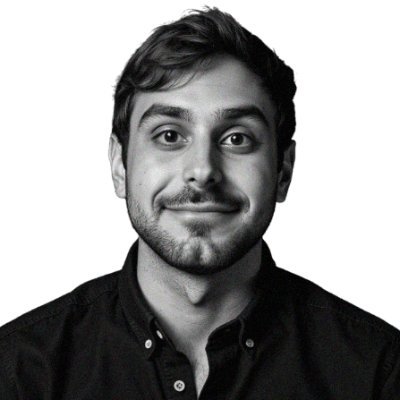
💎 Keynote 1: Aleksander Hołyński
Assistant Professor, Columbia University & Staff Research Scientist, Google DeepMind
|
|
🥪 Lunch and 🪧 Poster Session 1 (Rosenthal Pavilion, 10th floor):
12:00PM — 2:00PM
We'll have posters and ample time for casual conversation.
Each attending PI will be given a 24” (high) × 36” (wide) posterboard in one session. This can be used as the PI sees fit: for instance, a single larger poster or multiple smaller posters. You can find the assignments here.
|
|
Afternoon Session (E&L Auditorium, 4th floor):
2:00PM — 4:30PM
|
⚡ Lightning Talk Session 2
- Yixuan Wang, Columbia: Interactive World Simulator for Robot Policy Training and Evaluation
- Xiang Li, Stony Brook: Motion World Models for Robot Control
- Zilai Zeng, Brown: Self-Improving Loops for Visual Robotic Planning
- Junbang Liang, Columbia: Dreamitate: Real-World Visuomotor Policy Learning via Video Generation
- Aileen Liao, Penn: VLM-Focus: Task-Relevant Scene Reduction for Planning and Control in Clutter
- Eadom Dessalene, UMD: FEEL (Force-Enhanced Egocentric Learning): A Dataset for Physical Action Understanding
- Levi Burner, UMD: Embodied Visuomotor Representation
- Ying Wang, NYU: Temporal Straightening for Latent Planning
- Tianjiao Ding, Penn: Sparse Latent Concept Geometry for Steering Foundation Models
|
|
|
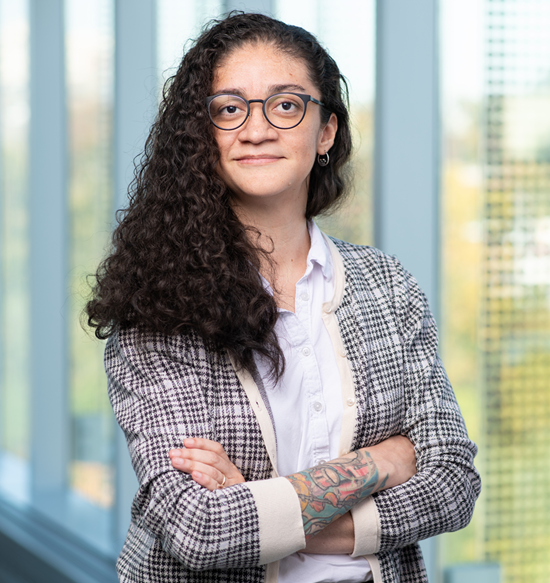
💎 Keynote 2: Paola Cascante-Bonilla
Assistant Professor, Stony Brook University
|
|
Brief Break
|
|
⚡ Lightning Talk Session 3
- Zekun Li, Brown: LLaMo: Scaling Pretrained Language Models for Unified Motion Understanding and Generation with Continuous Autoregressive Tokens
- Hazel (Heejeong) Nam, Brown: Causal-JEPA: Learning World Models through Object-Level Latent Interventions
- Kaleb S. Newman, Princeton: Video Models Reason Early: Exploiting Plan Commitment for Maze Solving
- Protyay Dey, Buffalo: Inference-Time Answer Correction and Topology Adaptation for SLM Multi-Agent Reasoning Systems
- Wenxuan Li, Johns Hopkins: The AI That Sees Cancer Coming
- Yuyang Ji, Drexel: From 3D Pose to Prose: Biomechanics-Grounded Vision-Language Coaching
- Chris Liu, NYU: Finch: Pareto Efficient EEG Foundation Model Family for Brain Computer Interface
- Yifan Wang, Stony Brook: From Noise to Neural Signals: Continuous Flow Matching for EEG Generation
- Bilal Abdulrahman, CUNY: Beyond Pedestrian Flow: Evaluating Urban Sidewalk Friction and Accessibility via Efficient State Space Models
- Peter Michael, Cornell: Noise-Coded Illumination
|
|
🪧 Poster Session 2 (Rosenthal Pavilion, 10th floor):
4:30PM — 6:15PM
We'll have posters and ample time for casual conversation.
Each attending PI will be given a 24” (high) × 36” (wide) posterboard in one session. This can be used as the PI sees fit: for instance, a single larger poster or multiple smaller posters. You can find the assignments here.
|
|
|